The 50/30/20 Budget Rule
Popularized by Senator Elizabeth Warren, the 50/30/20 rule is a simple, durable framework for household budgeting.
The rule in one paragraph
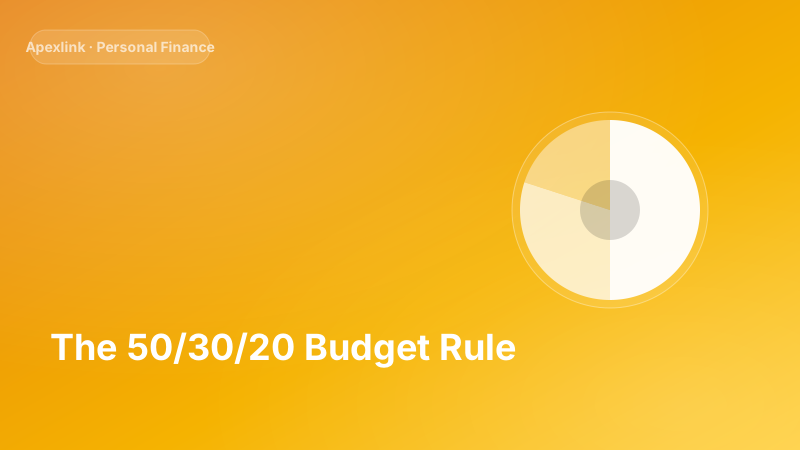
Take your after-tax income. Spend up to 50% on Needs (housing, groceries, insurance, minimum debt payments). Spend up to 30% on Wants (dining out, hobbies, subscriptions). Send at least 20% to Savings & Debt Payoff.
Adjusting for high-cost-of-living cities
In coastal metros, Needs frequently exceed 50%. Consider a 60/20/20 variant while you increase income or move Wants toward zero temporarily.
Frequently asked questions
Where does 401(k) match fit?
Above the 20%. Employer match is free money and should always be maxed before optimizing the other categories.
Bottom line
Understanding the 50/30/20 budget rule is one of the highest-leverage things you can do for your financial future. Bookmark this guide, share it with a friend, and use the calculators linked below to run the math on your own numbers. Money decisions are rarely urgent, but they compound — so a good decision today easily becomes an outsized win a decade from now.
Related articles
Creating a Realistic Budget

How to Pay Off Debt Faster

Reader comments (3)
This finally cleared up something my previous advisor kept hand-waving. Bookmarking.
Would love a follow-up piece on how this changes for self-employed households.
Really appreciate that you cited primary sources — most sites don’t.